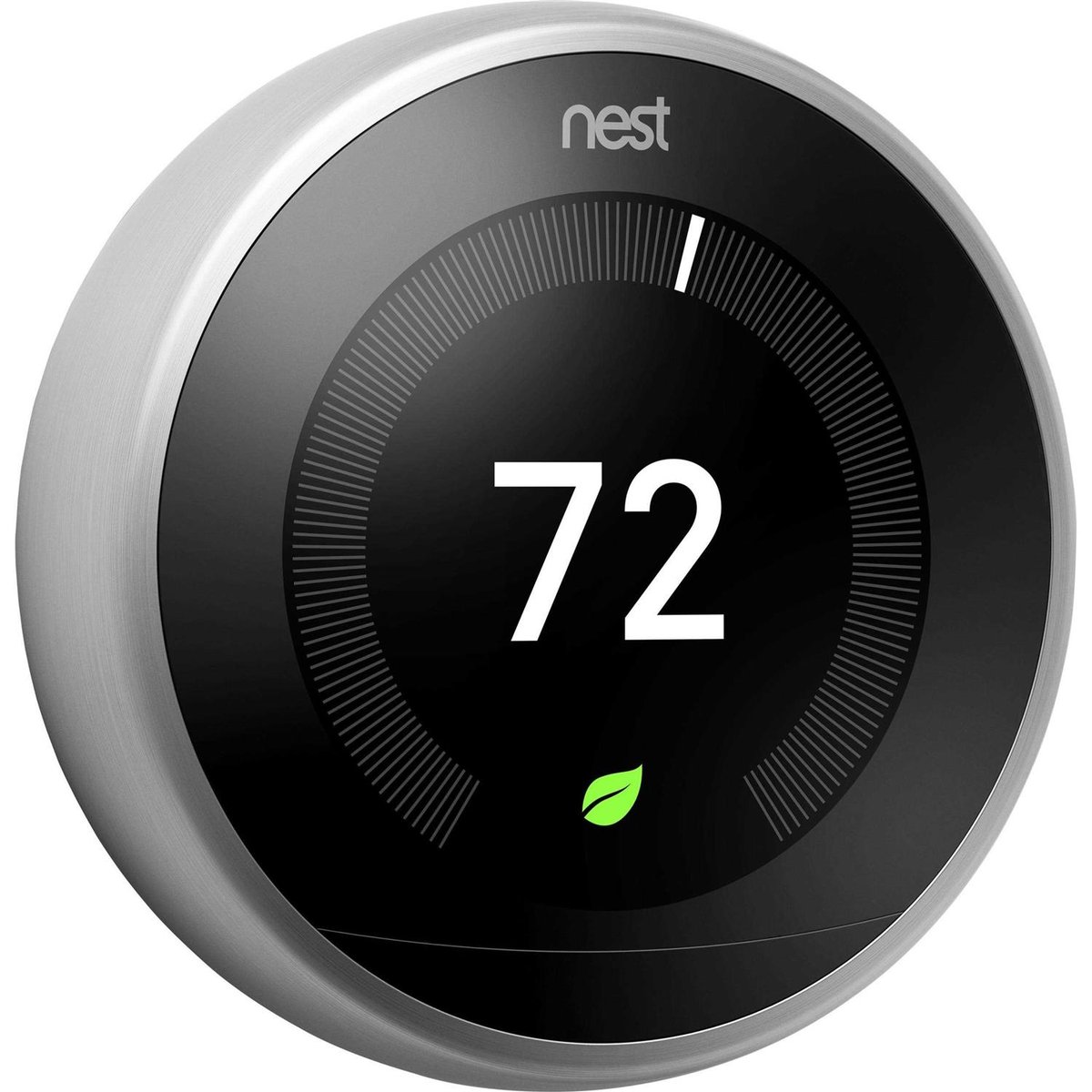
Heating and cooling your home isn't just about comfort; it's the biggest slice of your energy pie, typically gobbling up over half of a US household's annual energy consumption. This stark reality places your thermostat squarely in the spotlight as a key player in energy management. Enter the Nest Thermostat, a smart device promising not just to regulate your home's temperature, but to revolutionize your approach to Nest Thermostat Pricing, Value & Energy Savings. But what's the real story behind the sleek designs and smart features? Is it truly a worthwhile investment?
This comprehensive guide pulls back the curtain, offering an expert look at Nest thermostats – from their initial cost to their long-term value, and the substantial energy savings they can unlock. We'll cut through the marketing jargon, empowering you with the knowledge to make an informed decision for your home and wallet.
At a Glance: Smart Savings with Nest
- Significant Savings: Nest thermostats can save an average of 12% on heating and 15% on cooling bills.
- Rapid Payback: Most users see their investment paid back through energy savings within two years.
- ENERGY STAR Certified: All Nest thermostats meet the rigorous energy efficiency standards set by the EPA.
- Feature-Rich: Benefits include automated scheduling, Home/Away Assist, energy insights, and smart home integration.
- Model Variety: Choose from the Google Nest Thermostat, Nest Thermostat E, or the premium Nest Learning Thermostat 3rd Gen, each offering distinct features and price points.
- Rebates & Discounts: Look for utility company rebates, retail sales, and bundle offers to reduce upfront costs significantly.
- User-Friendly: Designed for straightforward self-installation and intuitive control via app or voice.
The Smart Thermostat Revolution: Why Nest Matters
For decades, thermostats were simple devices: a dial, a switch, maybe a basic timer. They managed temperature, but never truly learned or optimized. The rise of smart home technology changed that, and Nest was a trailblazer, fundamentally reimagining how we interact with our home's climate control.
Nest's philosophy is rooted in intelligence and automation. Instead of you constantly tweaking temperatures, these devices are designed to understand your habits, anticipate your needs, and make energy-saving decisions autonomously. This shift from reactive to proactive climate control is precisely why smart thermostats have become a cornerstone of modern, energy-efficient homes. They're not just about convenience; they're about preventing wasted energy and putting money back in your pocket.
Unpacking Nest's Core Features: More Than Just a Dial
Beyond simply setting a temperature, Nest thermostats are packed with intelligent features designed to optimize your home's energy consumption without sacrificing comfort. Understanding these capabilities is key to appreciating their true value.
Automated & Adaptive Scheduling
Imagine a thermostat that learns your daily routine – when you wake up, when you leave for work, when you return, and when you go to bed. That's Nest's core genius. The Nest Learning Thermostat automatically observes your preferences and builds a personalized, energy-efficient schedule. Other models guide you through creating one. This ensures your HVAC system only runs when needed, avoiding wasteful heating or cooling of an empty house. It's set-it-and-forget-it convenience with a powerful savings punch.
Savings Finder & Seasonal Savings
Think of Savings Finder as your personal energy coach. It periodically analyzes your usage and suggests minor tweaks to your temperature schedule – perhaps adjusting your sleep temperature by a degree or two. You can accept these suggestions directly from the app or thermostat to incrementally boost your savings. Similarly, Seasonal Savings intelligently fine-tunes your schedule as the weather shifts from summer to fall or winter to spring, ensuring optimal efficiency year-round.
Home/Away Assist: Never Heat an Empty House
One of the most effective energy-saving features, Home/Away Assist, uses built-in sensors and, if you opt-in, your phone's location to detect when your home is empty. When it senses no one is around, it automatically switches to an energy-saving "Eco temperature." This prevents your system from needlessly heating or cooling an unoccupied space, dramatically reducing energy waste. It's a simple yet powerful way to save without lifting a finger.
The Nest Leaf Icon: Your Green Light for Savings
Keep an eye out for the small green Nest Leaf icon that appears on your thermostat's display or in the Google Home app. This friendly indicator signals that you've chosen an energy-efficient temperature. It acts as a subtle nudge, reinforcing good habits and encouraging you to make further energy-saving choices throughout the day.
Rush Hour Rewards: Get Paid to Save
Many energy companies offer programs that reward you for reducing energy consumption during peak demand times, often called "energy rush hours." Nest thermostats can integrate with these programs, automatically adjusting your temperature slightly during these periods to help you save energy and earn rewards from your utility provider. It's a win-win for your wallet and the grid.
HVAC Monitoring & Energy History
Your Nest thermostat isn't just a temperature controller; it's a diagnostic tool for your HVAC system. It monitors your heating and cooling equipment for unusual patterns, sending you alerts about potential issues before they become major problems. It also provides helpful maintenance reminders, ensuring your system runs efficiently. The Energy History feature, accessible via the app, offers detailed insights into your daily and monthly energy usage, showing you exactly how and when you're consuming energy, empowering you to make smarter choices.
Smart Home Integration & Remote Control
In today's connected world, seamless integration is paramount. Nest thermostats work effortlessly with Google Assistant and Amazon Alexa, allowing for convenient voice control. Beyond voice, you can control your thermostat remotely from anywhere using your smartphone, laptop, or tablet. Forgot to adjust the temperature before leaving for vacation? No problem – a few taps on your app, and you're set. This remote accessibility was found to lead to a 23% reduction in energy use for participants in a Nest Labs case study. For 70% of users who prioritize compatibility when choosing smart home products, Nest delivers.
Nest Temperature Sensor: Zone in on Comfort
While the Nest Learning Thermostat often includes one (or can be purchased separately for other models), the Nest Temperature Sensor (2nd gen) is a game-changer for homes with uneven heating or cooling. Place this small sensor in any room that tends to be too hot or too cold, and your Nest thermostat will prioritize maintaining the desired temperature in that specific area. You can set up to six additional sensors via the Home app, ensuring consistent comfort where you need it most.
The Bottom Line: Quantifying Nest's Energy Savings
Let's get to the numbers. The promise of energy savings is a primary driver for many considering a smart thermostat. Nest doesn't disappoint, backing its claims with robust data.
Independent studies conducted in 2015 (across 41 US states) and an updated assessment in 2024 consistently confirmed that Nest thermostats can save an average of 12% on heating bills and 15% on cooling bills. These findings, derived from comparing utility bills before and after installation, demonstrate a tangible impact on household budgets. More broadly, smart thermostats generally enable homeowners to save between 10% to 15% on heating and cooling bills annually.
Beyond individual savings, the collective impact is staggering: since October 2011, all Nest thermostats have collectively saved over 100 billion kWh of energy. That's a testament to the power of widespread adoption of smart, energy-efficient technology.
Furthermore, it's not just about promised savings; it's about verified efficiency. The Nest Learning Thermostat received ENERGY STAR® certification from the EPA in February 2017, making it the first smart thermostat to earn this distinction. Since then, all other Nest thermostats have also achieved ENERGY STAR® certification, assuring you that you're investing in a product that meets rigorous energy efficiency standards.
Nest Thermostat Models: Which One Is Right for You?
Google offers a range of Nest thermostats, each designed to meet different needs and budgets. Understanding their distinctions is crucial for making the best choice.
Google Nest Thermostat (e.g., Snow version/2020 Model)
This is Google's entry-level smart thermostat, offering an excellent balance of features and affordability.
- Design: Sleek, modern, and unobtrusive, often available in various colors like Snow, Sand, and Charcoal.
- Key Features: ENERGY STAR certified, easy programming via the Google Home app, remote control, Savings Finder, HVAC monitoring, and voice control (Google Assistant/Alexa). It automatically adjusts temperatures when users leave home (Home/Away Assist).
- Installation: Often works without a C wire, simplifying installation for many homeowners.
- Best For: Those new to smart thermostats who want essential smart features, significant energy savings, and a clean interface without a premium price tag. It's a solid, budget-friendly option.
Google Nest Thermostat E
The "E" stands for "Easy" or "Essential," and this model certainly lives up to that. It's designed to blend seamlessly into your home with a more subtle aesthetic.
- Design: Features a frosted display that blends into the background, making it less conspicuous than other models.
- Key Features: Effortless setup (around 45 minutes), auto-learning feature (though less advanced than the Learning Thermostat), Home/Away Assist, app control, Google Assistant/Alexa integration, HVAC monitoring, and Energy History.
- Note: The Nest Temperature Sensor is sold separately for this model, allowing you to add zone control if desired.
- Best For: Homeowners seeking smart features with a minimalist design, who appreciate automatic learning capabilities but don't need the absolute top-tier features or the premium display of the Learning Thermostat.
Google Nest Learning Thermostat 3rd Gen
The flagship model, the Nest Learning Thermostat 3rd Gen, is the most advanced and feature-rich option.
- Design: Boasts a premium design, often with a stainless steel ring, a weighty feel, a bright, clear display, and a signature rotating dial for intuitive manual adjustments.
- Key Features: Quick and intuitive setup via the app, the most advanced Auto-Schedule feature that truly learns and adapts to your routines, remote control via app, detailed Energy History, Nest Leaf for energy-saving nudges, and Home/Away Assist. It also includes Farsight, which illuminates the display to show temperature, weather, or time when it detects you approaching.
- Note: This model often comes bundled with a Nest Temperature Sensor, enhancing its value for multi-room comfort control. You can Explore Nest 3rd Generation Thermostat further to understand its full capabilities.
- Best For: Tech enthusiasts, those who want the absolute best in smart thermostat technology, homeowners with complex heating/cooling needs, and anyone prioritizing premium design and the most comprehensive learning and control features. It offers the quickest payback due to its advanced optimization capabilities.
Installation & User Experience: Getting Started with Nest
One of Nest's strengths lies in its commitment to user-friendliness, extending from installation to daily interaction.
Installation: DIY or Pro?
Many Nest thermostats are designed for straightforward self-installation. With clear, step-by-step guidance provided directly through the Google Home app, most users can complete the process in about 20-45 minutes. This DIY approach saves on professional installation costs, adding to the thermostat's overall value.
However, compatibility is crucial. Before purchasing, use Nest's online compatibility checker to ensure it works with your existing HVAC system, especially if you have a heat pump or zone control setup. For more complex systems, or if you're simply uncomfortable working with wiring, around 30% of users opt for professional installation, which is a wise choice to ensure proper functionality and avoid potential issues.
Daily User Experience: Intuitive Control
Once installed, Nest thermostats generally shine in their daily operation. Users frequently praise the intuitive controls, whether through the physical device (especially the satisfying rotating dial of the Learning Thermostat) or the seamless integration with the Google Home app. Remote control via smartphone, laptop, or tablet is a standout feature, offering unparalleled convenience. Voice control through Google Assistant or Amazon Alexa further enhances the hands-free experience.
Potential Pitfalls and Considerations
While the experience is largely positive, it's important to acknowledge that no product is without its nuances. Around 15% of users have reported issues such as connectivity problems (Wi-Fi dropouts), programming glitches, or, in some cases, problems related to their heating and cooling systems after installation. These issues are often resolvable with troubleshooting, but they highlight the importance of proper installation and understanding your specific HVAC system's requirements. Ensuring a stable Wi-Fi connection is paramount for optimal performance.
Beyond the Sticker Price: Unlocking Deals, Discounts, and Rebates
The initial price of a Nest thermostat can range from around $100 for the basic model to $250 for the premium Learning Thermostat. While this represents an upfront investment, it's crucial to understand the many ways you can reduce this cost and accelerate your payback period.
Retailer Sales and Bundle Offers
Keep an eye on major retailers like Amazon, Best Buy, and the official Google Store. They frequently offer sales, especially during holiday periods (Black Friday, Prime Day, Cyber Monday) and seasonal events, with potential savings often reaching up to 25% on individual models. Look for bundle offers that combine a Nest thermostat with other smart home devices like cameras or speakers, which can provide even greater savings, sometimes up to 30% off the total package price.
Seasonal Promotions & Manufacturer Rebates
Manufacturers and retailers often roll out specific promotions during transition seasons like spring (when people consider AC upgrades) or fall (for heating efficiency). These can include direct discounts or manufacturer rebates that offer an additional $50-$100 back for investing in energy-efficient technologies.
Trade-in Discounts
Some programs, though less common, offer discounts (e.g., around $50 off) a new Nest thermostat when you trade in an old, less efficient model. It’s worth checking if such programs are active when you’re ready to purchase.
Financing Options
To ease the upfront financial burden, many retailers provide "buy now, pay later" financing options, allowing you to spread payments over 6-12 months, often interest-free. This can make a Nest thermostat more accessible if immediate cash flow is a concern.
Utility Company Rebates: A Major Cost Reducer
This is arguably the most significant way to reduce your Nest thermostat's cost. Many local utility companies offer substantial rebate programs to incentivize their customers to adopt energy-efficient technologies like smart thermostats. These programs aim to lower overall energy consumption, benefiting both consumers and the grid.
- How it Works: Utility rebates can range from $50 to $150 or even more, effectively cutting a significant chunk off the purchase price.
- Eligibility: You'll typically need to meet specific criteria, such as residing in a particular service area, purchasing an ENERGY STAR certified model (which all Nest thermostats are), and sometimes having specific types of HVAC systems.
- Process: You'll usually need to submit proof of purchase (receipt) and potentially your utility account number.
- Verification: Always check your specific utility company's website or contact them directly before purchasing to verify current eligibility requirements, rebate amounts, and program duration, as these can change frequently.
Where to Look: - The official Google Store
- Major electronics retailers (Amazon, Best Buy, Home Depot, Lowe's)
- Coupon aggregation websites
- Your local utility company's website
- Social media channels for exclusive offers
By strategically combining these discounts and rebates, you can often acquire a Nest thermostat at a fraction of its sticker price, making the path to energy savings even shorter.
The True Value Equation: ROI and Long-Term Savings
Beyond the upfront cost and potential rebates, the true value of a Nest thermostat lies in its return on investment (ROI). Given the proven energy savings (12-15% on heating and cooling), the payback period for a Nest thermostat is surprisingly quick for most households.
Calculating Your Payback Period
Let's consider an example:
- Average annual heating/cooling bill: $1,500
- Estimated Nest savings: 12.5% (average of 12% heating, 15% cooling)
- Annual savings: $1,500 x 0.125 = $187.50
- Cost of a Nest Thermostat (e.g., $150 after rebates): $150
- Payback Period: $150 / $187.50 = 0.8 years (less than 10 months!)
Even for a higher-end Nest Learning Thermostat at its full price of $250, and assuming more conservative annual savings, the payback period is often within 1 to 2 years. After this point, every dollar saved on energy bills is pure profit.
Beyond Monetary Savings: The Intangible Value
The value proposition of a Nest thermostat extends far beyond just dollars and cents.
- Enhanced Comfort: Automated scheduling and features like the Nest Temperature Sensor mean your home is always comfortable when you need it to be, without constant manual adjustments.
- Convenience & Control: Remote access and voice control offer unparalleled convenience, allowing you to manage your home's climate from anywhere in the world.
- Environmental Impact: By reducing energy consumption, you're also lowering your carbon footprint, contributing to a more sustainable future. This aligns with a growing desire for eco-conscious living.
- Peace of Mind: HVAC monitoring alerts can catch potential system issues early, potentially saving you from costly repairs or inconvenient breakdowns.
- Increased Home Value: Smart home technology, including smart thermostats, can be an attractive feature for potential buyers, subtly increasing your home's appeal and value.
The question "Is it worth it?" shifts from purely financial to a broader consideration of comfort, convenience, and environmental responsibility. For many, the seamless integration of these benefits makes the Nest thermostat an invaluable addition to their home.
Common Questions About Nest Thermostats
Let's tackle some frequently asked questions to provide even more clarity.
Do I Need a C-Wire for Installation?
Not always. The Google Nest Thermostat (2020 model) and the Nest Thermostat E are often designed to work without a C-wire in many systems, simplifying installation. However, for the Nest Learning Thermostat 3rd Gen and for consistent power and optimal performance in all systems (especially those with multiple stages, zone controls, or without an existing C-wire), a C-wire is highly recommended or may be necessary. If your system doesn't have one, a power accessory or professional installation might be required. Always check compatibility before purchase.
How Long Does It Take to Start Saving Money?
Nest thermostats start saving energy immediately by learning your schedule and using features like Home/Away Assist. The monetary savings accumulate over time. As discussed, the payback period for the initial investment is often within 1-2 years, with some households seeing returns in less than a year, depending on local energy costs and usage habits.
Is Nest Compatible with My HVAC System?
Nest thermostats are compatible with most 24V conventional and heat pump systems, including those with multiple stages. However, complex systems (e.g., proprietary systems, high-voltage systems, or some zone control systems) might require professional installation or may not be fully compatible. Always use the compatibility checker on the Google Nest website before buying.
What About Data Privacy?
Google states that your personal information, including temperature settings and energy usage data, is used primarily to improve your Nest experience and energy savings features. They have strict privacy policies in place and typically require your explicit consent for data sharing with third parties (like utility companies for rebate programs). You have control over your data within the Google Home app.
Can a Nest Thermostat Control Multiple Zones?
Yes, but you'll need a separate Nest thermostat for each heating/cooling zone in your home. Each thermostat can then be controlled independently via the Google Home app, allowing you to manage different areas of your home to your specific comfort and energy-saving preferences. For single zones with uneven temperatures, the Nest Temperature Sensor can help by prioritizing comfort in a specific room.
Making the Smart Choice: Your Next Steps
Deciding whether a Nest thermostat is right for you boils down to weighing the initial investment against the tangible and intangible benefits it offers. From substantial energy savings on heating and cooling, confirmed by independent studies, to the sheer convenience of smart home integration and remote control, the value proposition is compelling.
Your next steps should involve:
- Assessing Your Needs: Consider which Nest model best fits your lifestyle, desired features, and budget – from the essential Google Nest Thermostat to the premium Nest Learning Thermostat 3rd Gen.
- Checking Compatibility: Use the online compatibility checker to ensure your chosen Nest thermostat will work seamlessly with your existing HVAC system.
- Investigating Rebates & Deals: This is critical. Contact your local utility company to inquire about smart thermostat rebates, and keep an eye out for seasonal sales and bundle offers from major retailers. These can significantly reduce your upfront cost and accelerate your ROI.
- Considering Installation: Decide if you're comfortable with self-installation or if a professional setup is warranted for your system's complexity.
By taking these proactive steps, you're not just buying a thermostat; you're investing in smarter energy management, enhanced home comfort, and long-term financial savings. Embrace the intelligence of a Nest thermostat and take control of your home's energy future today.